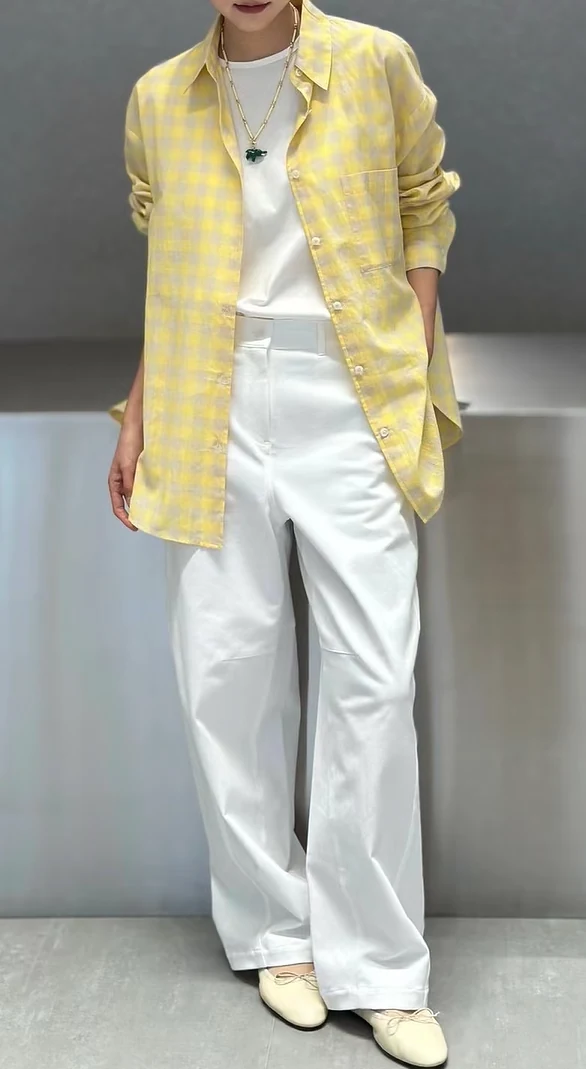
Match the fabric to the intended silhouette, wear conditions and care routine before approving a woven shirt for production.
Choosing fabric for a woven shirt starts with deciding how the shirt should look and feel in use. A crisp office shirt, a soft oversized blouse and a washed casual shirt can all work in cotton-rich fabrics, yet they ask different things of the weave, finish and garment construction.
Compare the weave, weight and hand feel
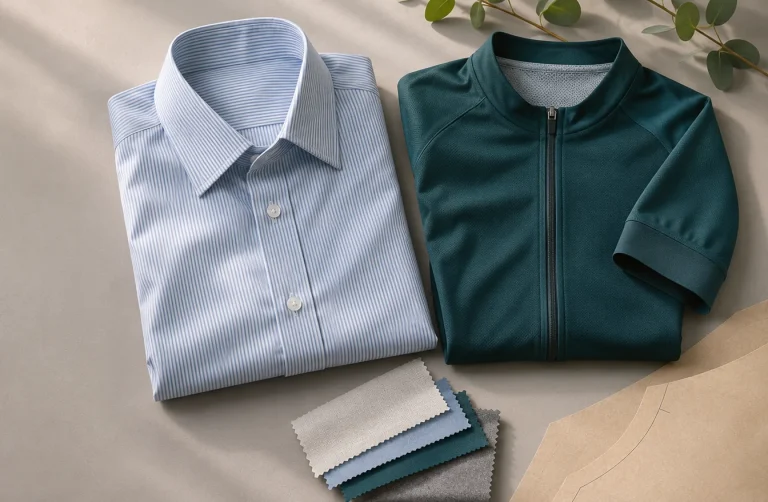
Poplin often makes sense for a clean shirt with a smooth surface and defined collar. Oxford has a more visible texture and can suit a relaxed button-down. Twill is recognisable by its diagonal structure, and some twills give a softer drape or greater coverage. Compare swatches of a similar weight under the same light before narrowing the choices.
Drape matters in a blouse with gathers or fluid sleeves. Opacity matters on a pale shirt that will be worn without a layer underneath. Hold material against the body and check it both flat and folded. For stripes or checks, feed the pattern repeat and matching requirements into the discussion early.
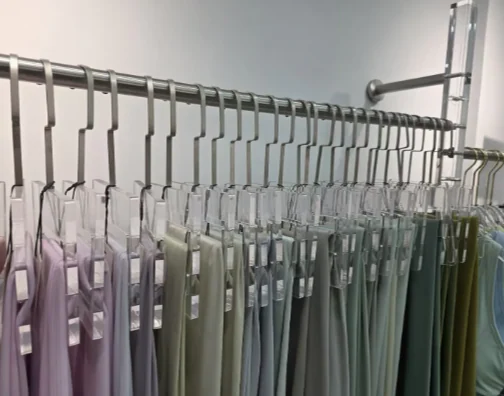
Review fabric and construction together
Make a sample with the intended interfacing at the collar, cuff and placket. A crisp collar needs enough support to hold its shape, while a soft shirt can lose its character if the interfacing is too firm. Judge puckering at the seams and how the material behaves around buttons, folded edges and curved sections.
If the shirt has a garment wash, review the effect on a sewn sample. Dimensions and seam appearance can change after laundering. Compare the changed sample with the intended silhouette as well as checking the fabric itself.
Confirm performance before bulk approval
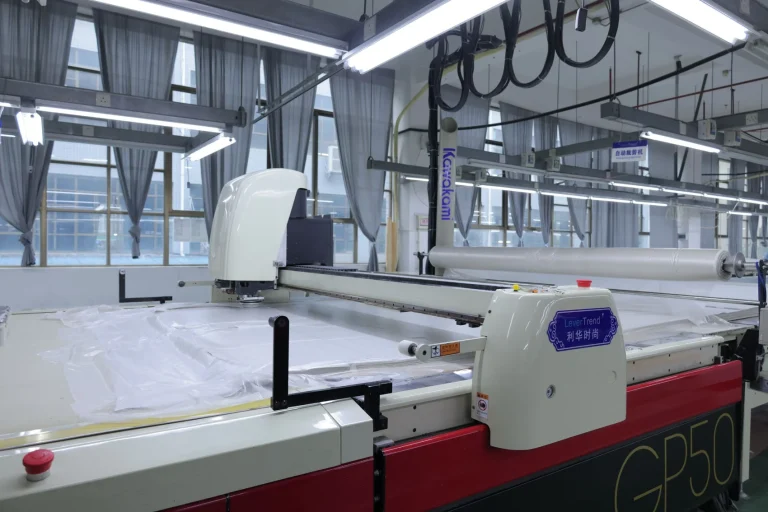
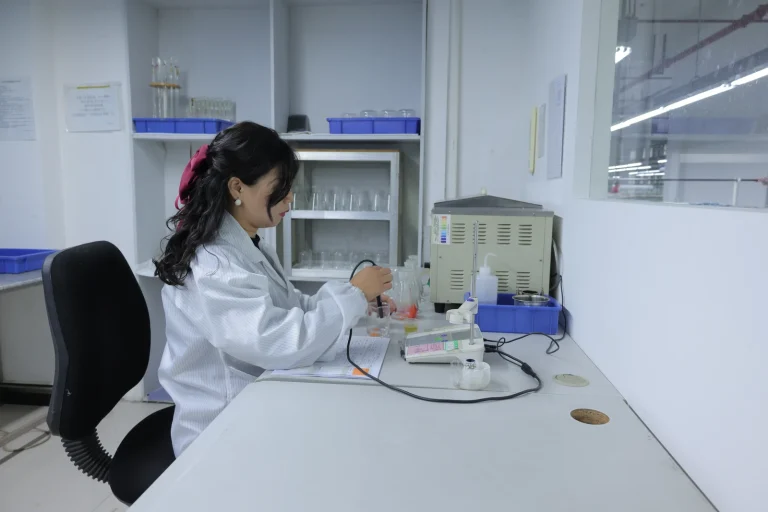
Agree how to check shrinkage, shade consistency, and colour transfer under the intended care conditions. Set the reference shade and compare bulk fabric against it before cutting. If the garment uses a light ground and a dark trim, review the combination for potential transfer.
LeverTrend’s development work includes woven shirts and blouses, with access to fabric and pattern teams. Include your target fit, hand feel, colour and care expectations in the brief so the sample can answer the decisions that matter to the collection.