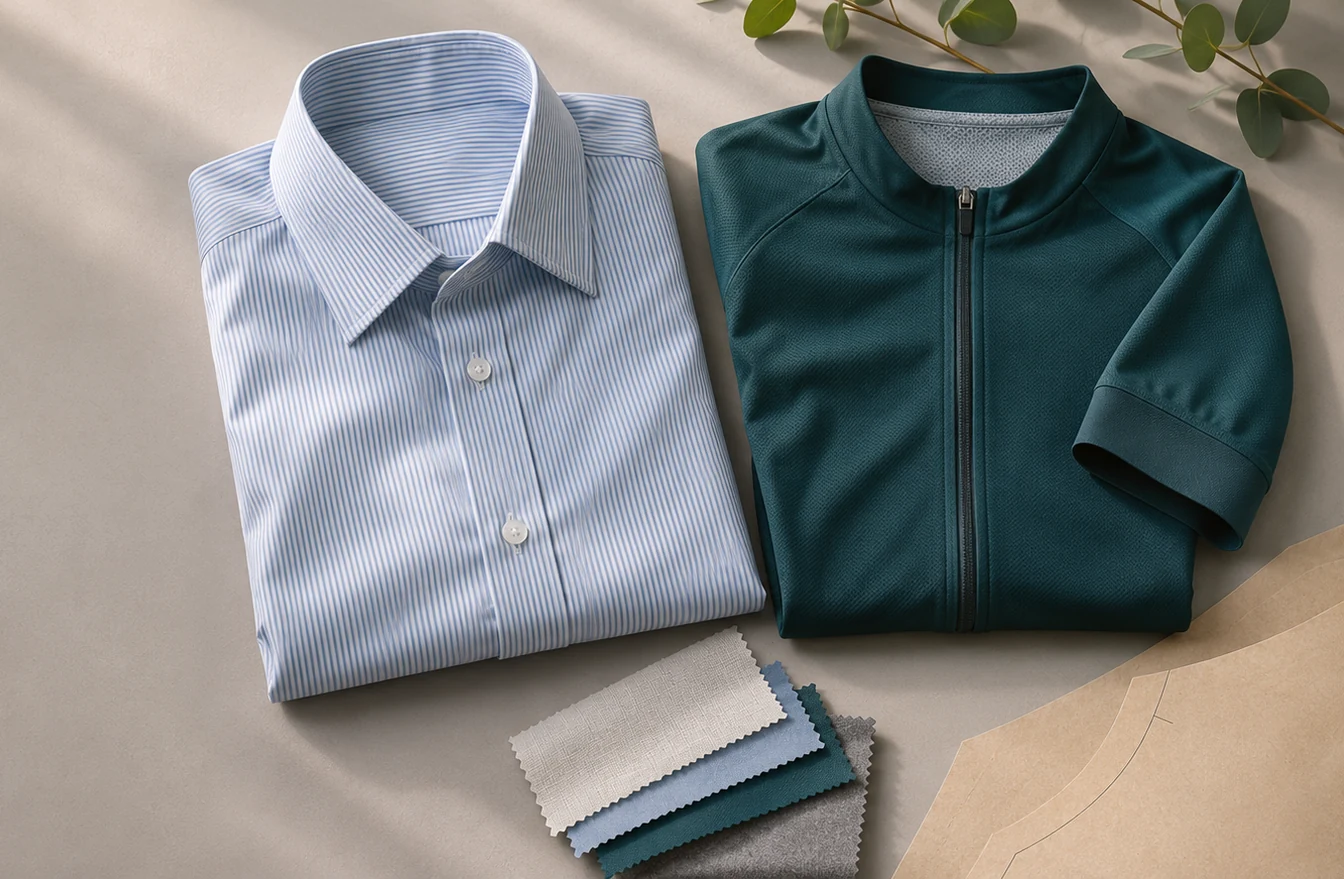
A practical checklist for turning a design brief into a tech pack that a pattern maker and sample room can work from.
A first sample works best when the designer, pattern maker and sample room are looking at the same instructions. Use this apparel tech pack checklist to make decisions visible before the first pattern is cut. It works for a woven shirt as well as a running top, with more detail wherever the garment has an unusual construction or fit requirement.
Show the silhouette and construction
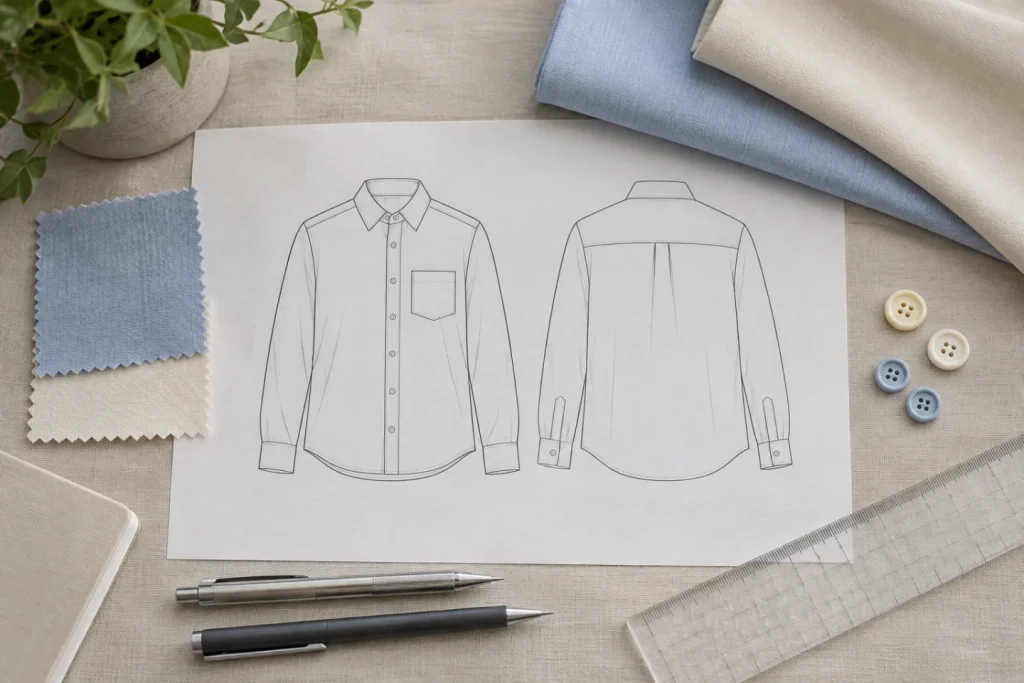
Start with front and back flats, then add close-ups of details the pattern maker cannot infer from the outline. A chest pocket needs its dimensions and placement from a fixed reference point. A hidden placket needs a drawing of how the layers overlap. Mark stitch lines, opening directions and any finishing details that affect the look or function.
Identify the style, sample size and revision on each sheet. Attach the reference garment or fit image with a short annotation identifying the feature it illustrates. A factory can then tell whether a reference is about sleeve volume, collar shape or the overall fit.
List measurements, materials and trims
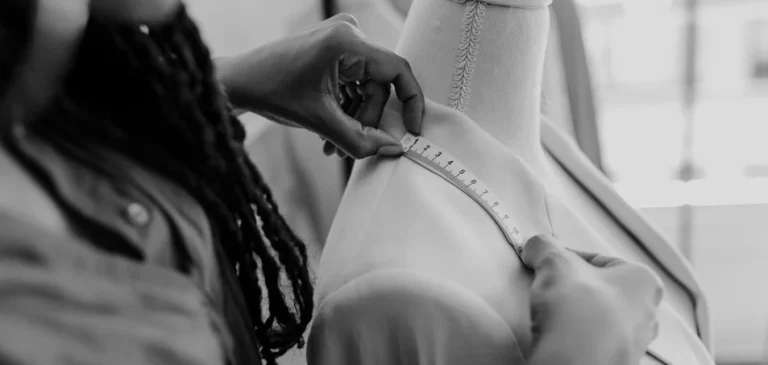
Define how each point of measure is taken. For example, indicate whether chest width is measured across the garment with buttons closed and where the tape sits below the armhole. Include the sample size measurements, units and agreed tolerances. Add grading once the base fit is ready for a size run.
Give each fabric and trim a position in the bill of materials. Include the main fabric, lining, interfacing, thread, buttons, labels and packaging where relevant. List the exact reference for each approval item and flag options that still need sourcing.
Record decisions after the fitting
Take front, side and back photos in consistent poses and capture movement where it affects fit. Turn observations into measurable instructions. For example, 'raise the cuff opening by 1 cm' gives the sample room more to act on than a note about the sleeve feeling long.
Issue one revised pack with a dated change log after the fitting. Confirm which comments are for the next sample and which decisions can carry forward to bulk. For help with pattern development or material options, share the current pack, reference sample, quantity and target date with the development team.