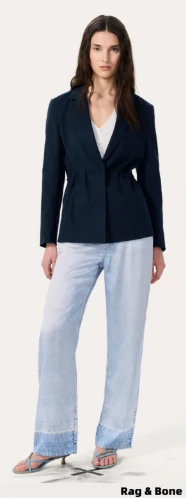
A fitting guide for reviewing jacket balance, sleeve pitch, lapel roll and movement during blazer development.
A tailored blazer can measure correctly on the table and still pull across the upper back or sit unevenly when buttoned. Use this tailored blazer fit checklist to look at the jacket on the body. Start with balance and the shoulder, then work through the sleeve, lapel and finishing details.
Check balance, shoulder line and collar
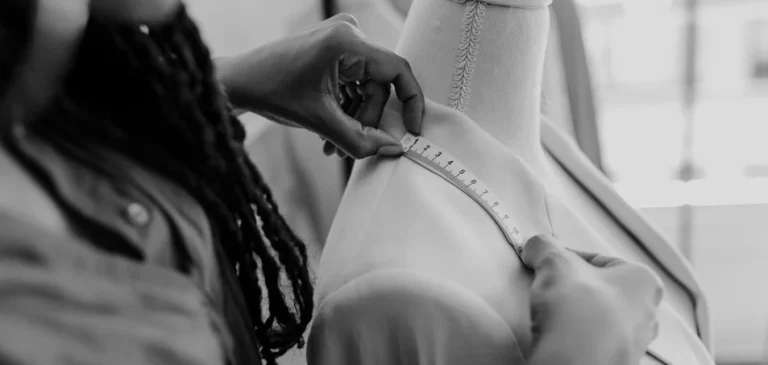
Ask the fit model to stand naturally and wear the intended base layer. Look from the side to see where the front and back hems hang. Check whether the collar follows the back neck and whether the shoulder line sits as intended. A collar gap or diagonal folds at the back are clues to investigate through the pattern and fitting.
Confirm whether the silhouette calls for a natural, extended or padded shoulder. Compare the shoulder with the approved reference and note any imbalance before pinning the waist. Changing width too early can disguise a balance issue elsewhere in the jacket.
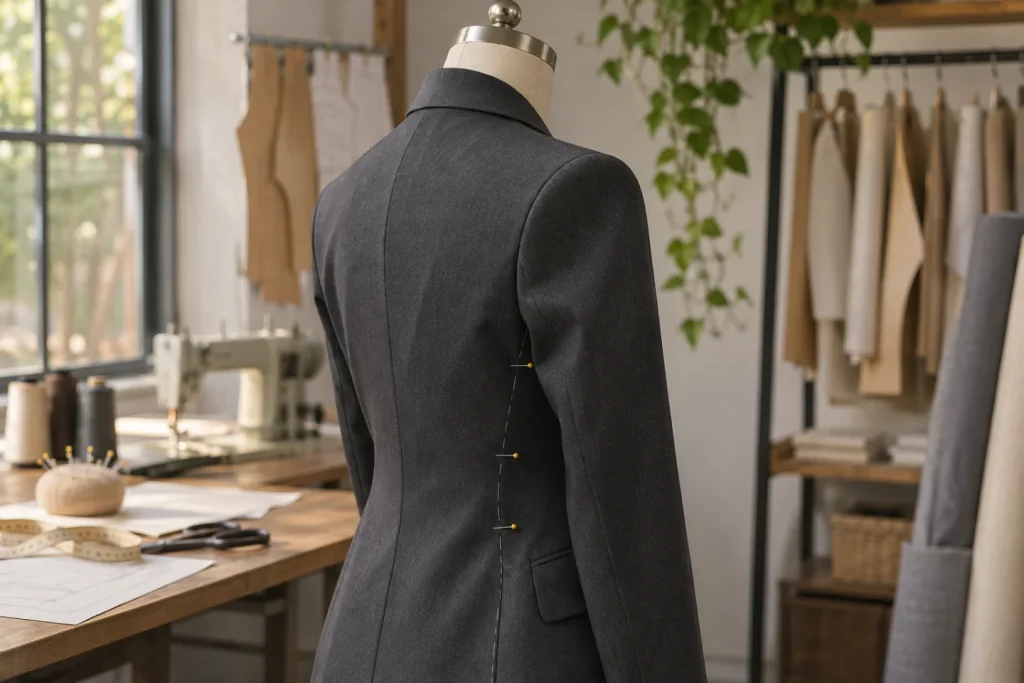
Review sleeve pitch and movement
With the arms relaxed, check that the sleeves follow the wearer’s natural arm position. Look for twisting and check the two cuffs against the intended length. Then ask the wearer to reach forward and sit. Pay attention to how the sleeve, armhole and back share the movement.
Review the lining during the same fitting. It needs enough ease in the right places to move with the shell fabric. Examine the vent and pocket openings with the jacket both open and buttoned.
Approve the lapel and finishing in production materials
Check the roll of the lapel, button position and how the jacket closes at the waist. Shell fabric, interfacing and pressing all affect how those areas behave. Review a sample in the intended material combination before signing off the finished look.
Make feedback measurable. Record whether the correction affects the pattern, construction or pressing, and keep photos with the approved revision. LeverTrend’s woven garment work includes tailored jackets, suits and coats, so a reference jacket and fit brief are useful inputs for a development conversation.