How should the silhouette move?

A bias-cut skirt follows the hip. A pleated skirt holds its shape at the waist and releases fabric into the stride. Choose how the hem should move before setting the cut.

For a fluid skirt
Set the hip ease, bias direction and lining length so the shell can fall freely.
For a structured skirt
Set the waist position, the point where the pleats open and the sweep at the hem.
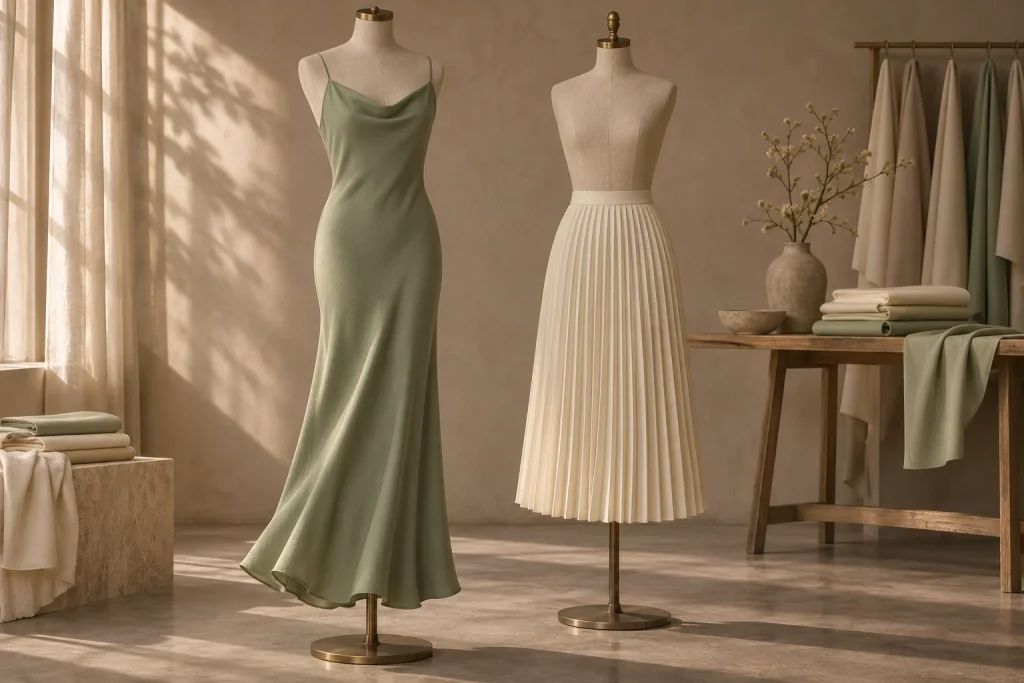
A sage bias-cut dress and an ivory pleated skirt on dress forms
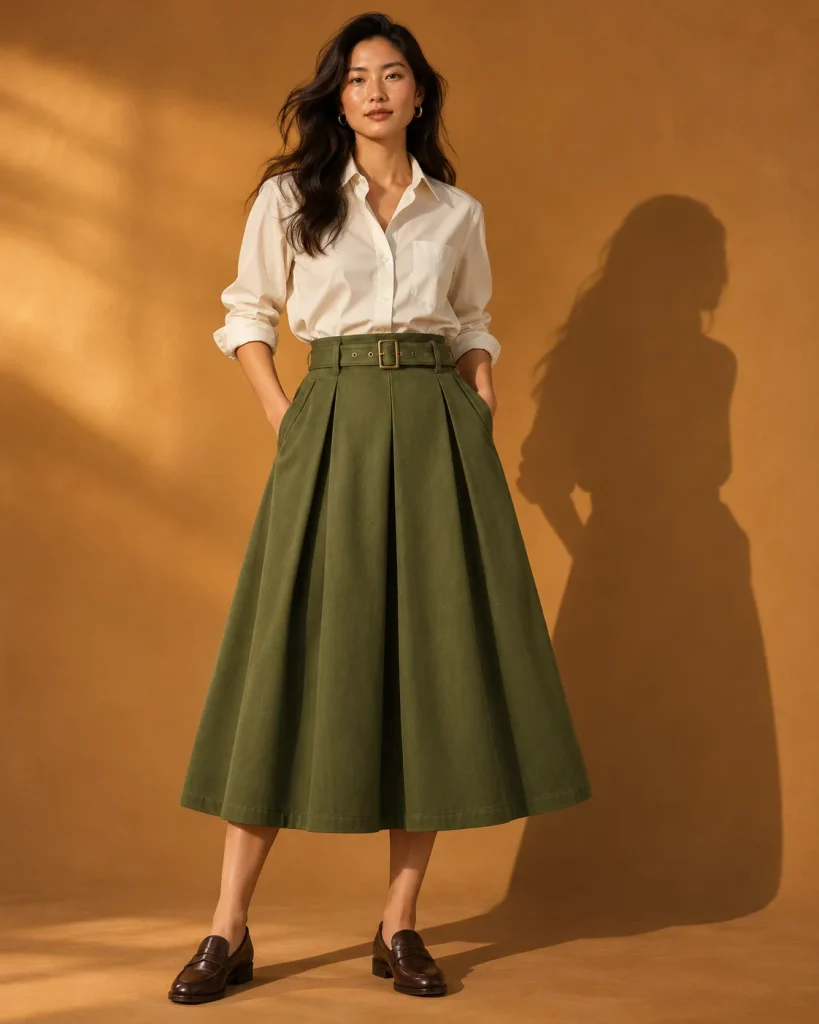
Olive pleated A-line skirt worn with an ivory shirt and brown loafers

The pleated A-line skirt

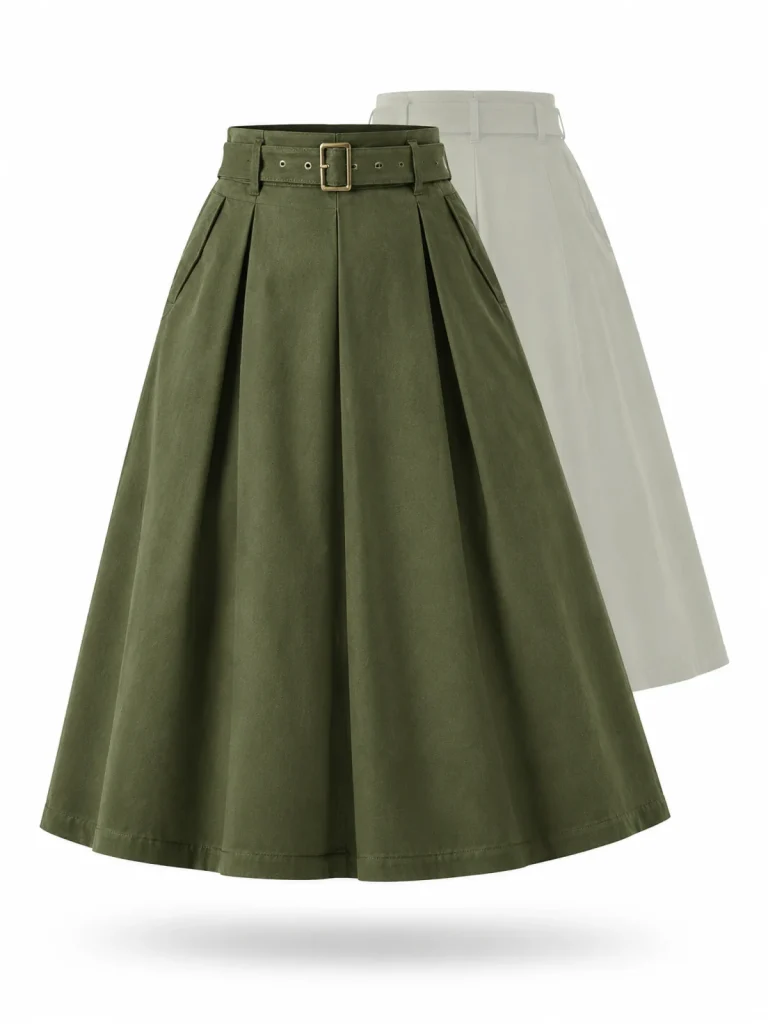
The olive sample uses a buckled high waist and deep front pleats. A flat centre panel keeps the front quiet while the folds give the hem room to open.

Look at the waist
Review belt width and buckle position together. The fastening should sit level when the wearer sits.
Look at the fold
Compare the skirt standing still and mid-stride. The pleats should return to their intended line.

Three fabric tests for a skirt

A swatch looks different once it is doubled, pressed or hung on the bias. Use these small trials to choose the sample cloth.

Opacity
Place the shell over the intended lining and check it in daylight.
Drape
Hang a bias strip and compare its length and fall with a strip cut on the straight grain.
Pleat memory
Press and release a trial fold. Check its edge again after the proposed care treatment.
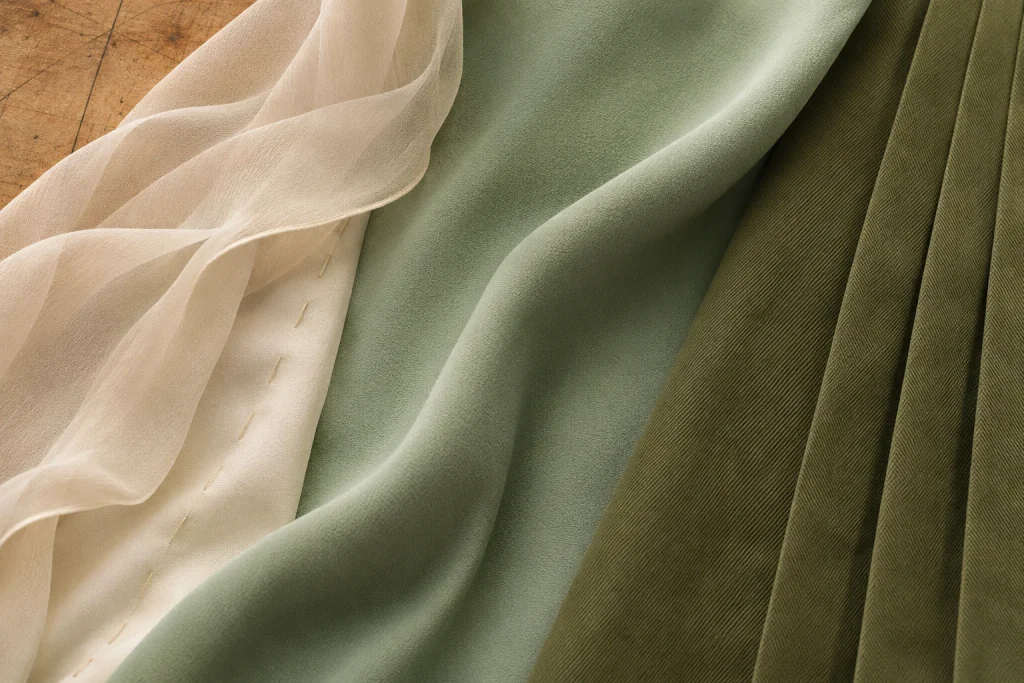
Ivory lining, sage crepe and pressed olive pleats

Details to settle at the fitting

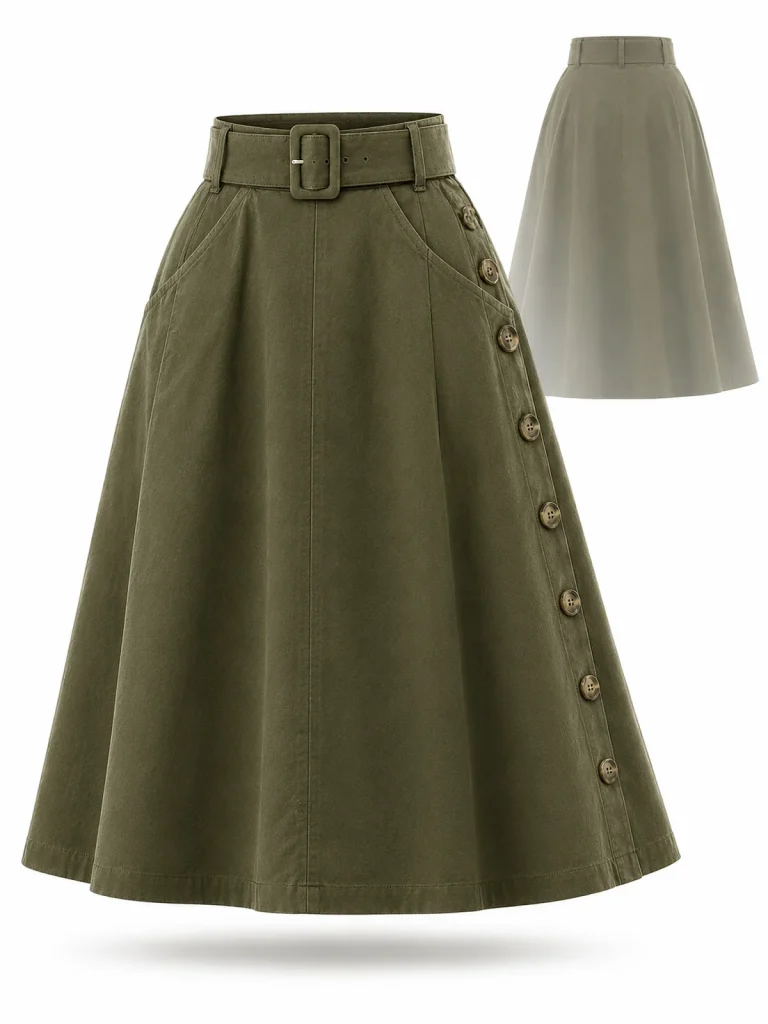
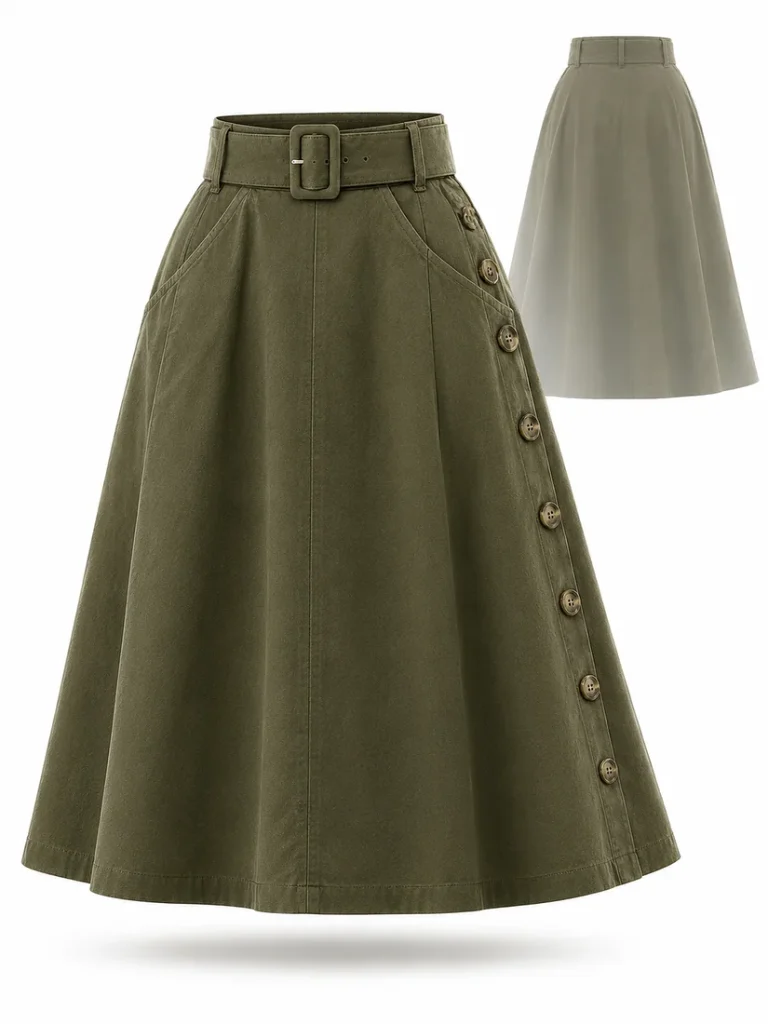
Olive A-line skirt with a matching belt and side-button detailing

Waist and closure

Try the waist seated as well as standing. Mark the fastening position with the actual belt, button or zip in place.

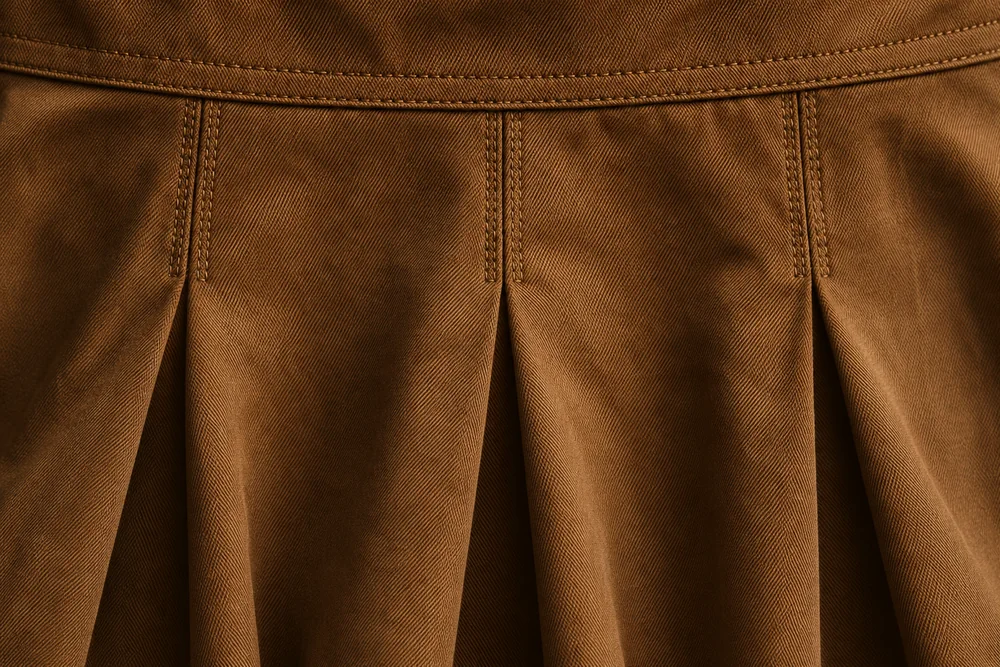
Tonal stitching holding tobacco-coloured skirt pleats closed below the waist

Pleat release

Pin the release at two heights and compare the side view. A small change can shift fullness from the hip to the hem.

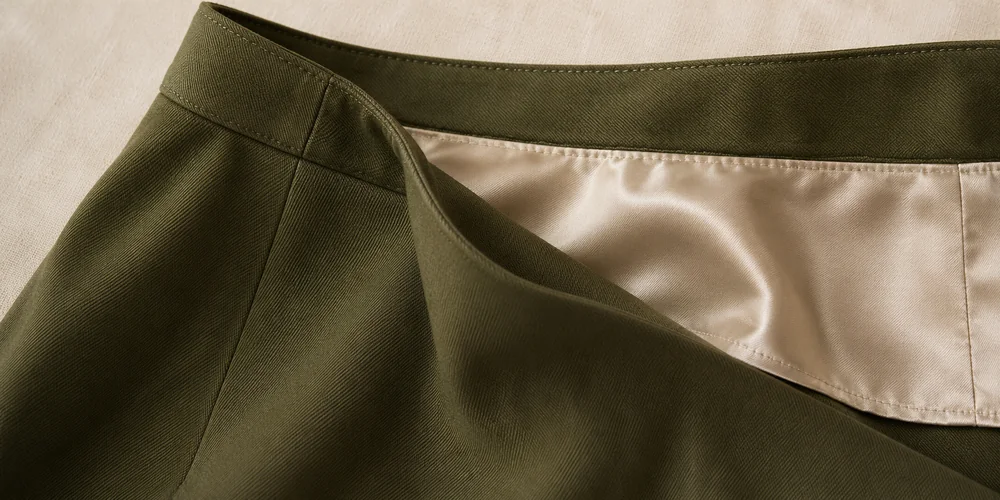
Champagne half-lining attached inside an olive woven waistband

Lining and hem

Walk in the sample to see whether the lining pulls or shows. Allow a bias-cut shell to hang before setting its finished hem.

Before your first fitting

Bring the cloth, the base-size measurements and a reference that shows the intended fit.

Which measurements matter most for a skirt?

Include the waist at the intended wearing position, full hip, waist-to-hip depth and finished length. For a pleated skirt, also specify the closed pleat width or reference the sample you want to match.

Mark the opening on a front or back sketch. Include the zip length, button spacing and whether the waistband needs an internal fastening.

Yes. Identify what should stay constant, such as the waist position or hem length. Compare both samples on the same fit model before approving the final pattern.