
Camp Collar Shirts
Open-collar short-sleeve shirts in stripes and tropical prints.
- Factory services
- Sampling & production
- Garment range
- Camp Collar Shirts
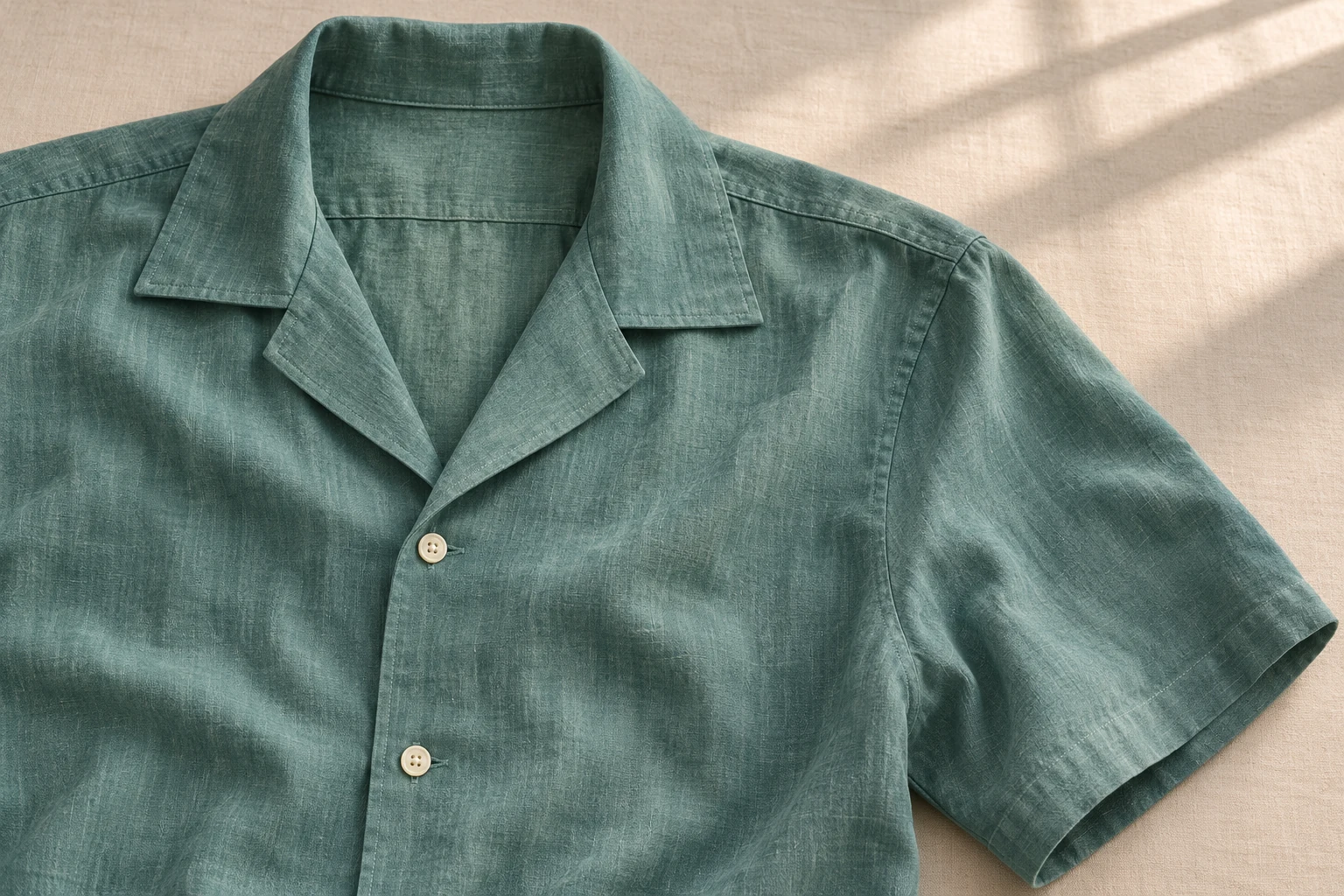
Develop a camp collar shirt for your label
A camp collar folds back into an open neckline. The first button, collar points and facing work together, so we develop them in the cloth your brand intends to use.
OEM from your block. Send the approved pattern or a sealed sample. Mark the opening depth, sleeve length and hem you want to carry across the size range.
ODM from a reference. A front view and a swatch give our Shenzhen team a starting point for the pattern. Tell us whether the collar should hold a crisp edge or fall softly.
For a printed collection, share the repeat with the brief. Its size affects where a motif lands at the opening and whether the pocket needs to be matched.
Two archive shirts, two artwork decisions
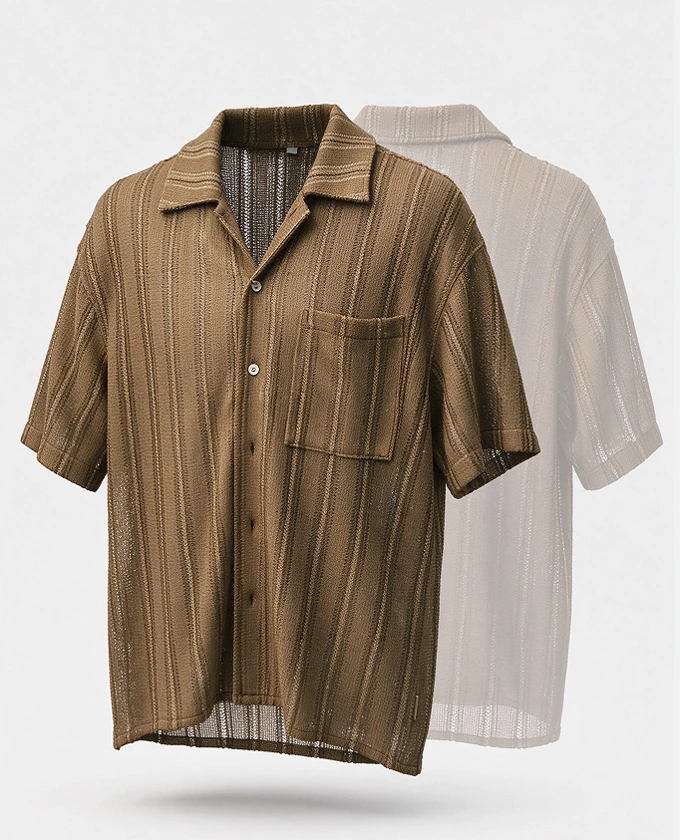
Match the pocket stripe
The caramel sample has a patch pocket over a vertical stripe. Mark the stripe that should run through the pocket centre and align it on the cutting sketch.
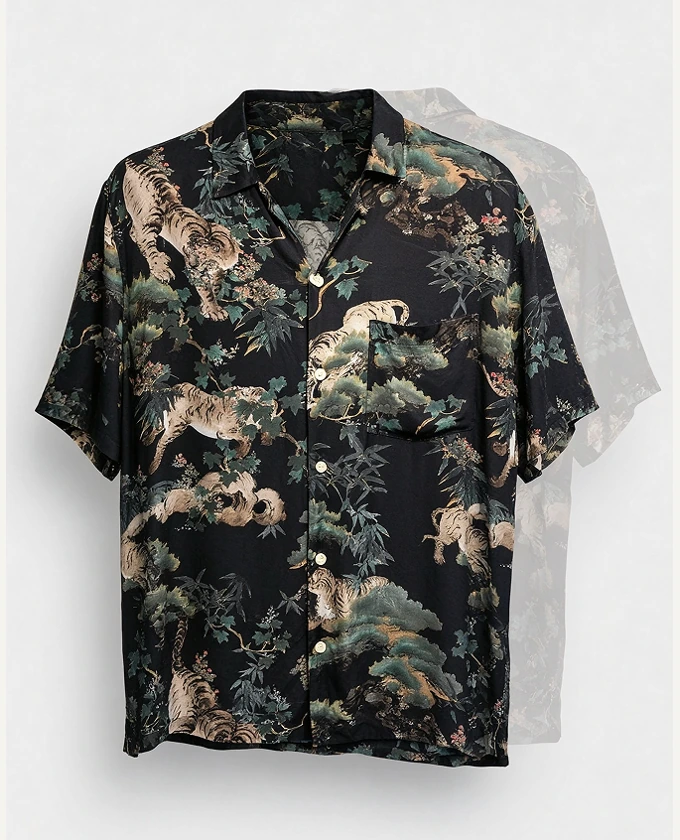
Place the botanical motif
On the dark printed shirt, a leaf can disappear into the front overlap. Supply one repeat at finished scale and circle the motif that should show when buttoned.
Six fabrics to consider for a camp shirt
Choose a swatch by the way the open collar falls, the amount of body in the sleeve and how the finished shirt will be washed. Include your target weight and colour when requesting samples.
Cotton poplin
A smooth surface gives the collar a clean edge. Check pale colours for show-through at the facing.
Cotton–linen blends
A useful starting point for a textured summer shirt. Wash the swatch and compare the finished length before cutting the fit sample.
Seersucker
The puckered surface gives the body room away from the skin. Check how much texture remains after pressing the collar.
Viscose challis
A fluid cloth for an all-over print. Hang the sample before setting the hem and review the neckline for stretching.
Lyocell twill
A soft twill gives the sleeve a rounded fall. Try the pocket in the actual cloth to check whether it pulls the front out of shape.
Lightweight chambray
A yarn-dyed option for a casual solid shirt. Test the proposed wash shade alongside the button and topstitch colours.
Specify the collar, body and finish
Collar and fastening
Set the point length, first-button position and facing depth. Confirm the interlining and the button size on a sample worn open and buttoned.
Body and sleeve
Choose the ease, shoulder drop, sleeve opening and finished length. Show the front and back hem on the same technical drawing.
Artwork and trims
Mark the pocket size, stripe matching or embroidery placement. Supply artwork at finished size and identify the thread, buttons and topstitching.
Private label and packing
Specify your neck label, care label and hangtag positions. List the folding method, size stickers and assortments by colour for packing.
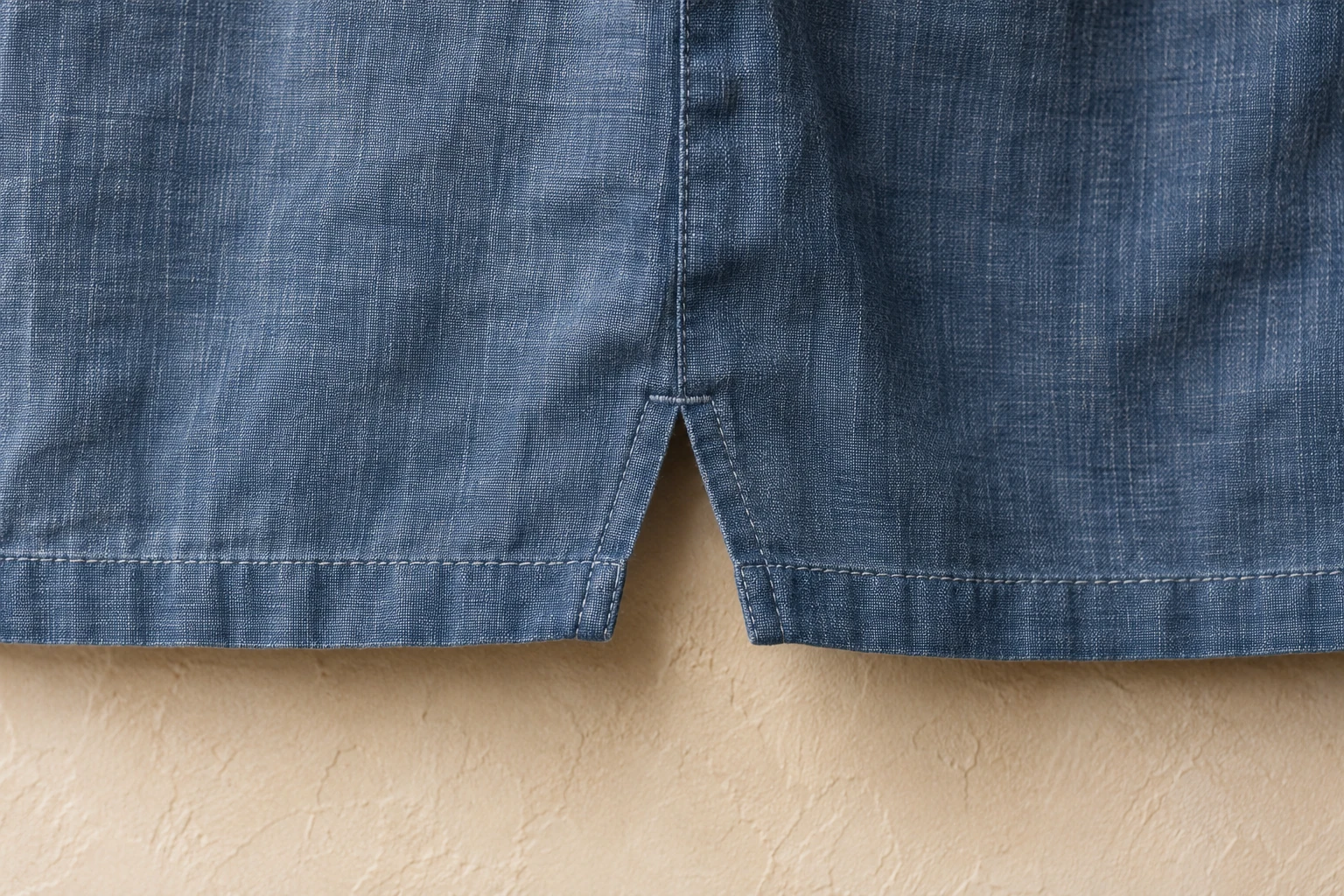
A short side vent lets an untucked hem open at the hip. Mark its height from the finished edge.
Approve the shape before grading
Measure the buttoned sample flat. Write the base size, units and tolerances on the same sheet as your fit comments.
A · Half chest
Measure straight across below the armholes. Record how far below the armhole the tape starts.
B · Body length
Measure from the high shoulder beside the collar to the hem. Record both lengths if the back is longer.
C · Sleeve opening
Measure the sleeve hem flat from edge to edge. Use that same method when comparing the washed sample.
From collar sample to production
For a quotation, include units by colour or print, the size range, delivery destination and required date. A marked neckline photograph helps us identify which collar to sample first.
01 · Review the brief
We review the reference or tech pack with your cloth choice. Identify which colourways share one pattern and which need separate artwork.
02 · Sample the neckline
Check the first button and collar roll on the first sample. For stripes or prints, review pocket placement and the buttoned front.
03 · Release the style for cutting
Approve the fit revision, shade or print strike-off, trims and size breakdown. Record the approved sample and order terms before bulk cutting.
04 · Inspect and pack
Check bulk shirts against the approved neckline, repeat placement and measurements. Pack by the agreed colour, size ratio and labelling instructions.