The shirt under the jacket

LeverTrend makes woven menswear for apparel brands. A shirt designed to sit under a blazer gives our pattern team a specific brief: a collar that sits against the lapel and a sleeve that moves inside the jacket.

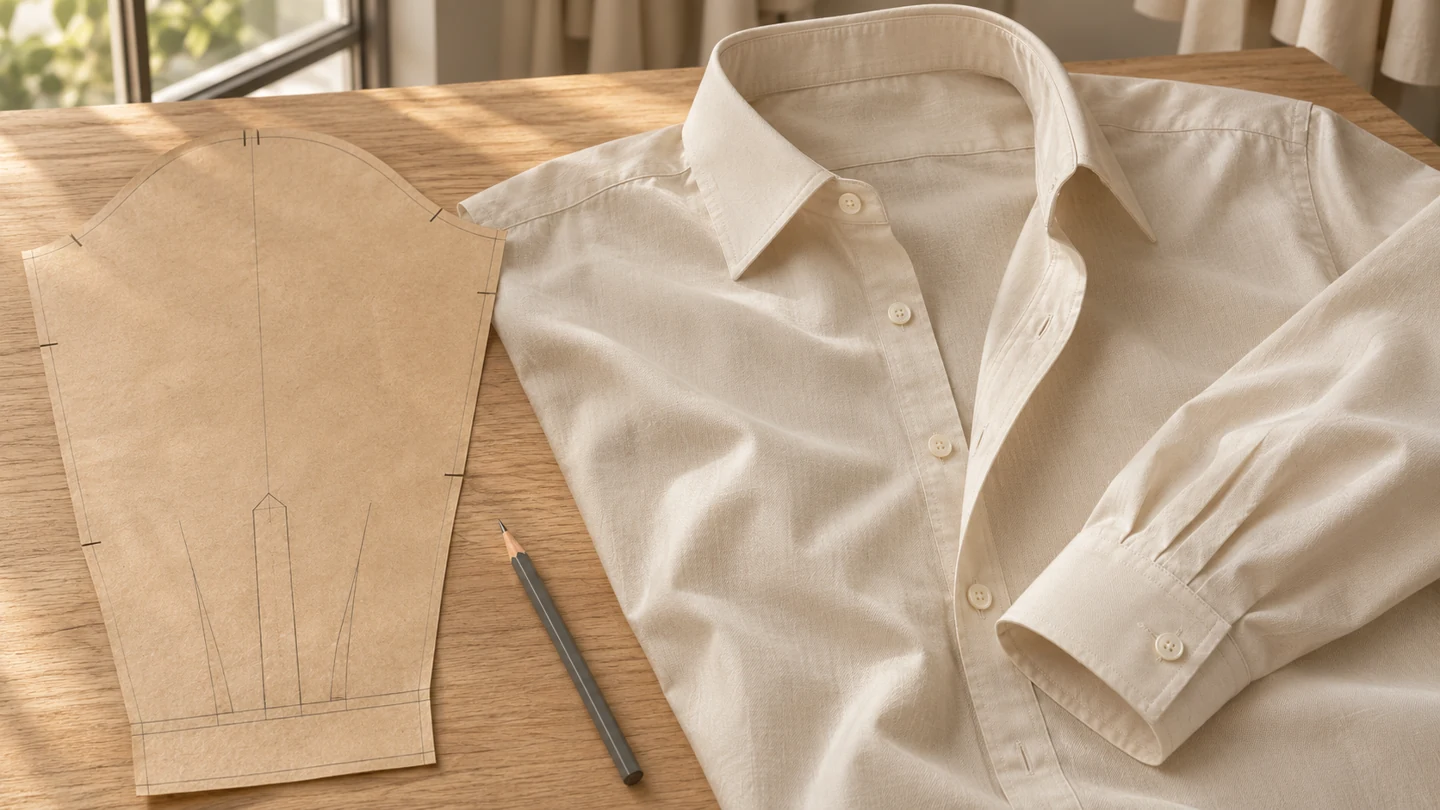
If your brand already has a shirt block, send the base-size pattern or an approved garment. Mark the measurements you want to keep, especially the neck, shoulder and upper arm.

For a new style, our Shenzhen development team can propose shirting fabrics and prepare a first pattern from your sketch or reference. We review the collar, cuff and placket in the selected cloth before you approve the sample.

If the blazer is part of the same order, send its measurements too. Sampling both pieces in the same size lets us resolve sleeve clearance before grading the range.

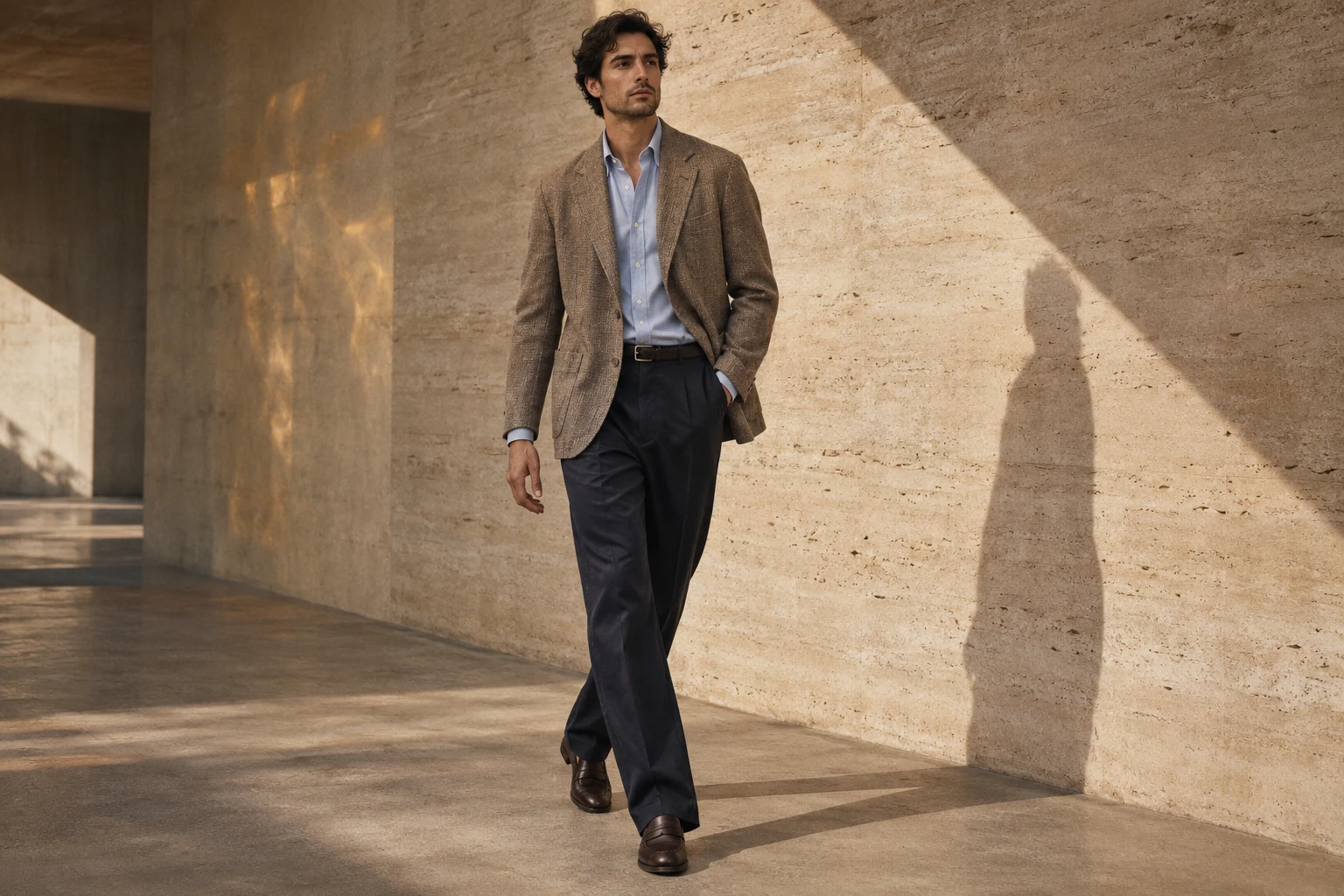
Styling study of a taupe blazer, blue shirt and charcoal trousers

Which menswear styles can we manufacture?

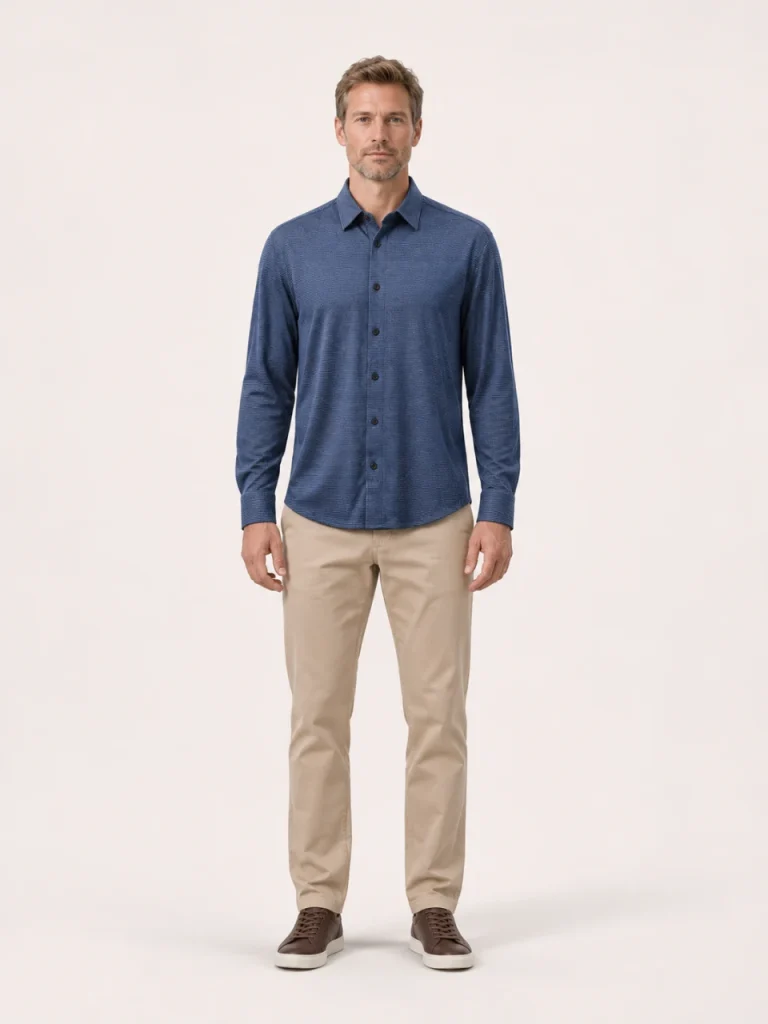
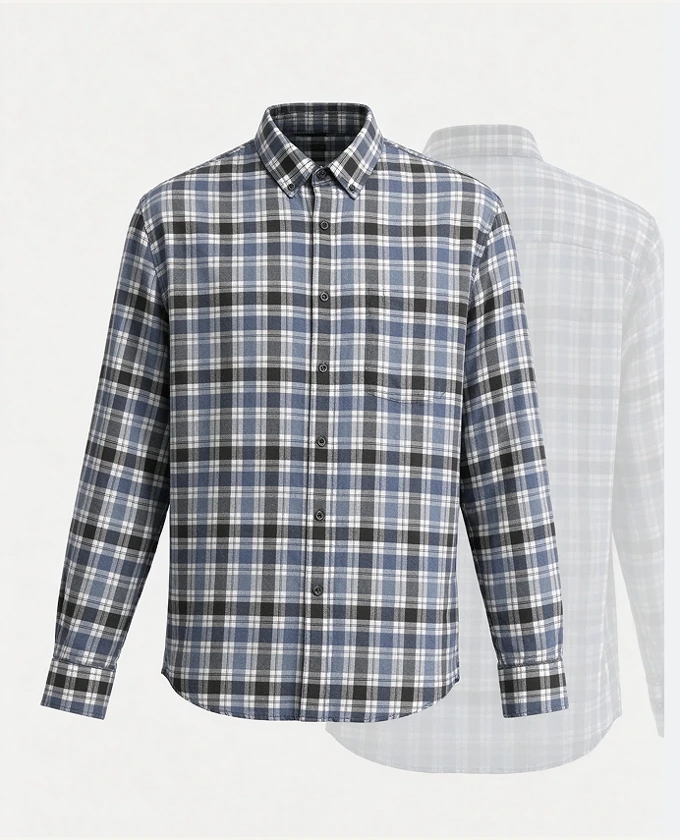
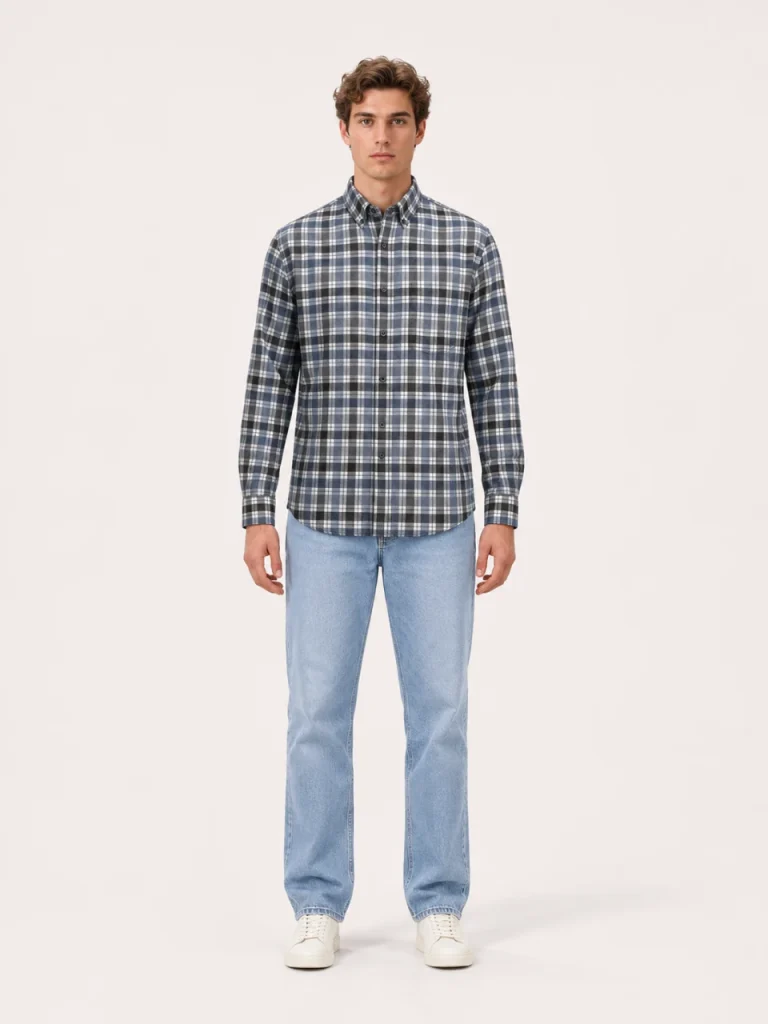
Blue checked dress shirt from the LeverTrend menswear collection

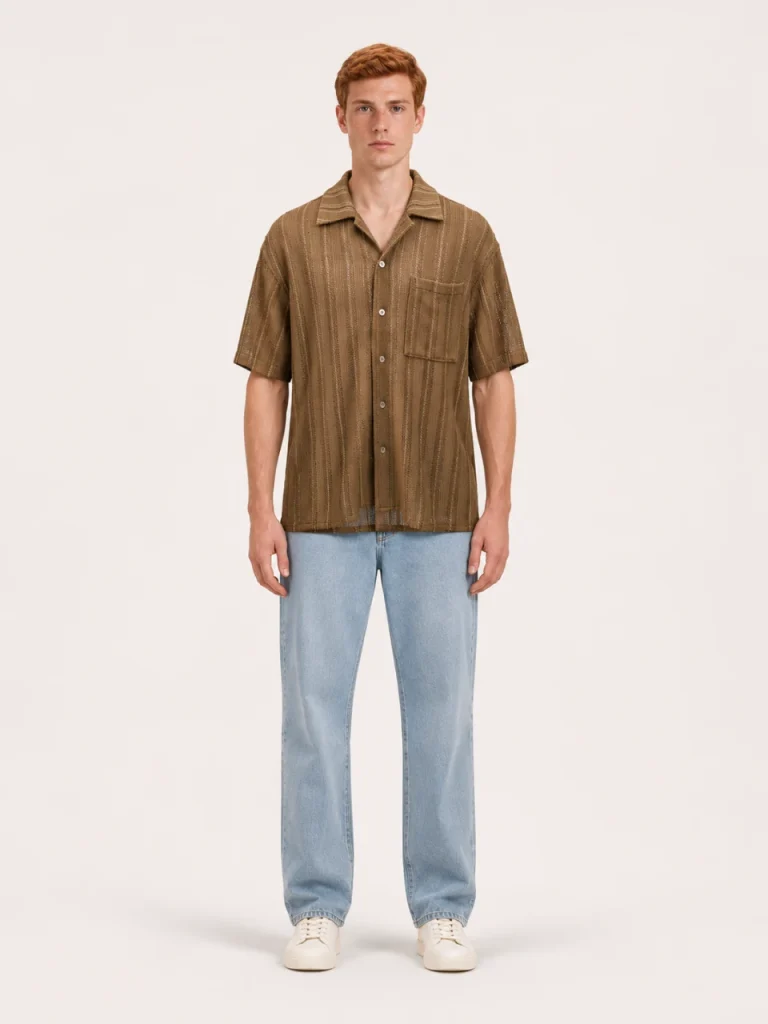
Woven shirts

Choose the collar construction, cuff, placket and hem for a formal shirt or a relaxed short-sleeve block.
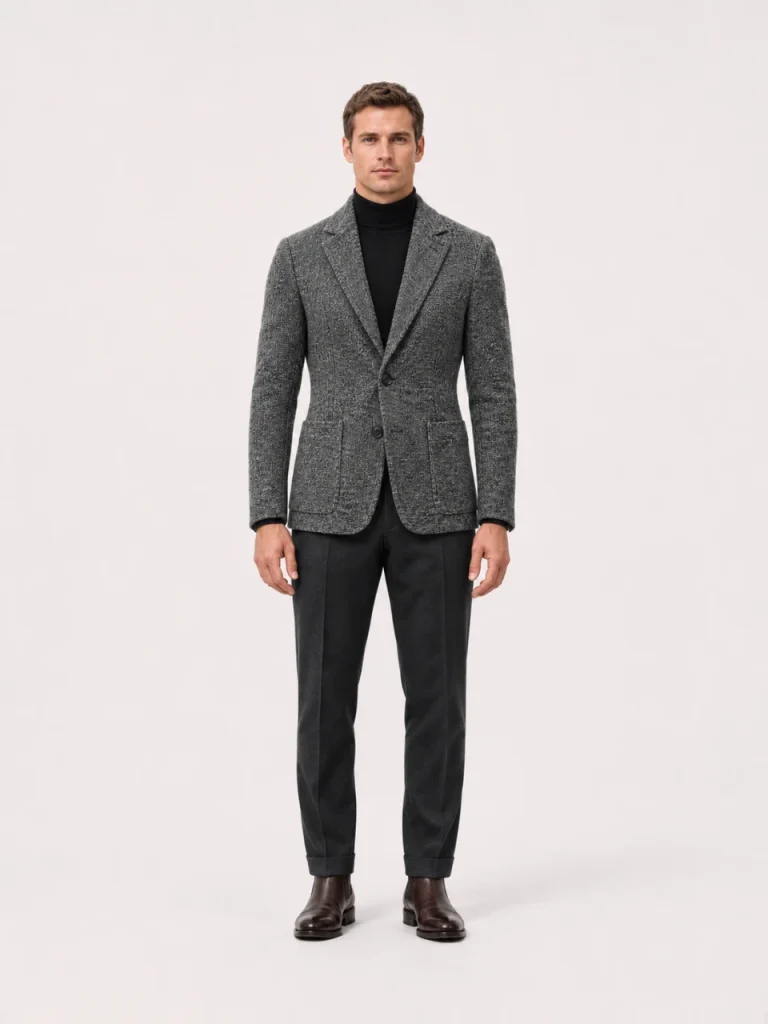
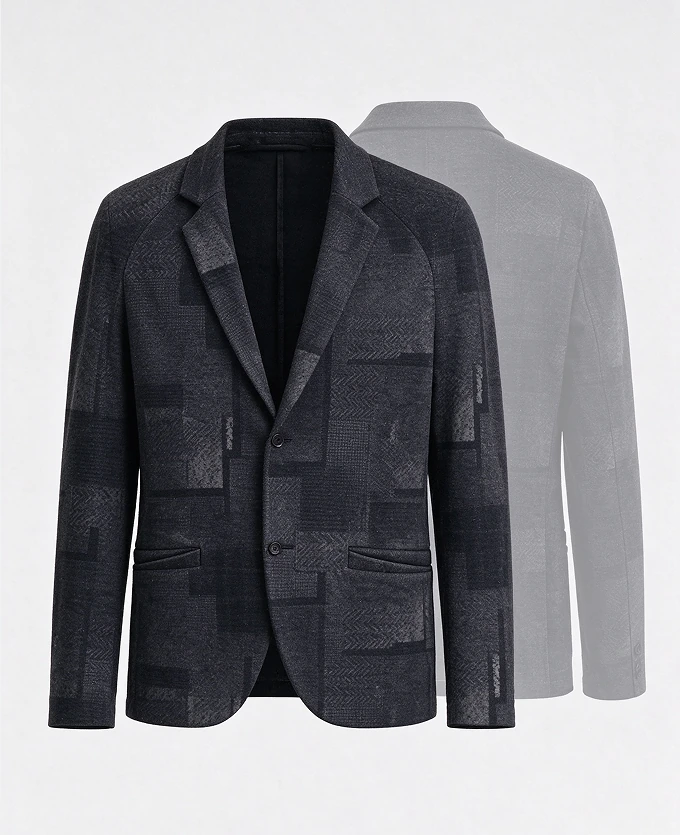
Dark patchwork blazer with notch lapels

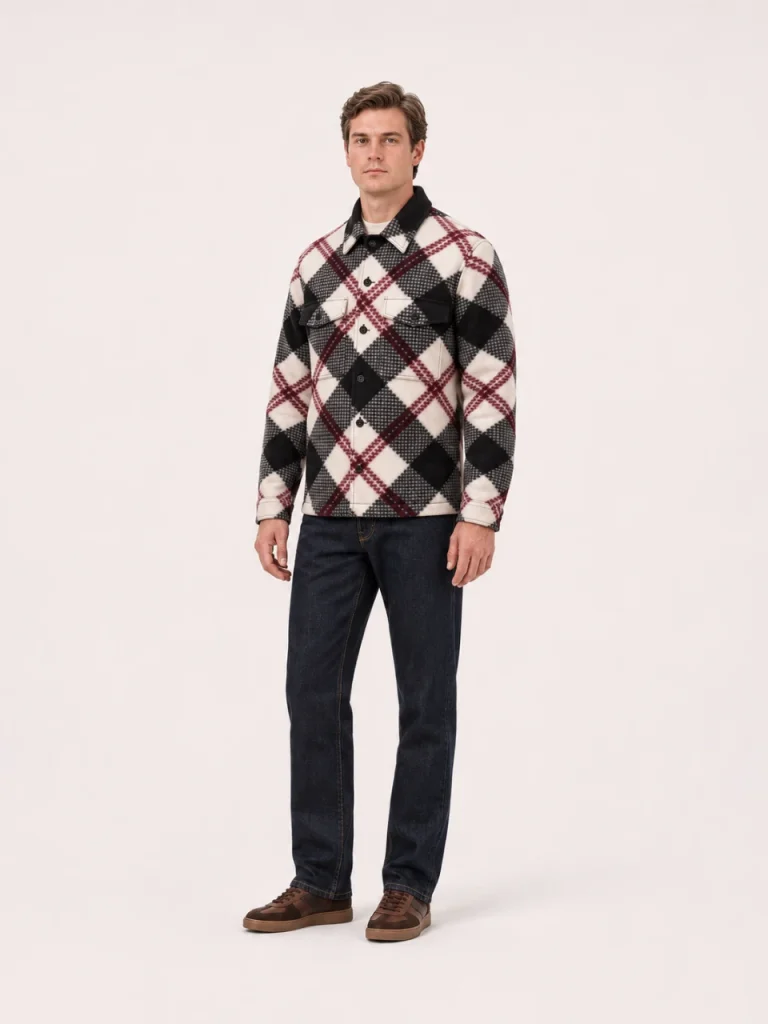
Tailoring and outerwear

Specify how much structure the shoulder needs, whether the body is lined and what sits beneath the jacket.
Blazers  ·  Overshirts  ·  Coats
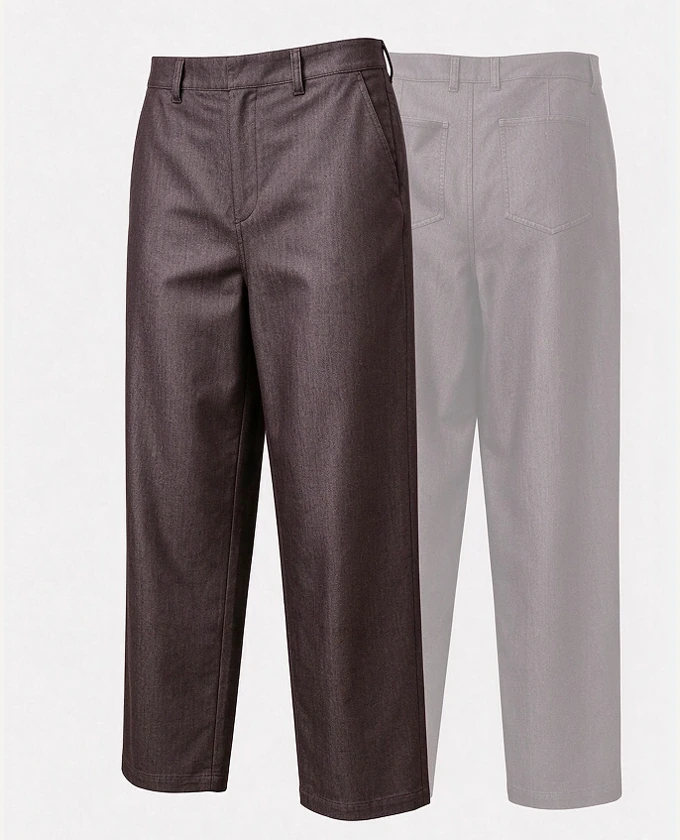
Dark straight-leg trousers from the LeverTrend menswear collection

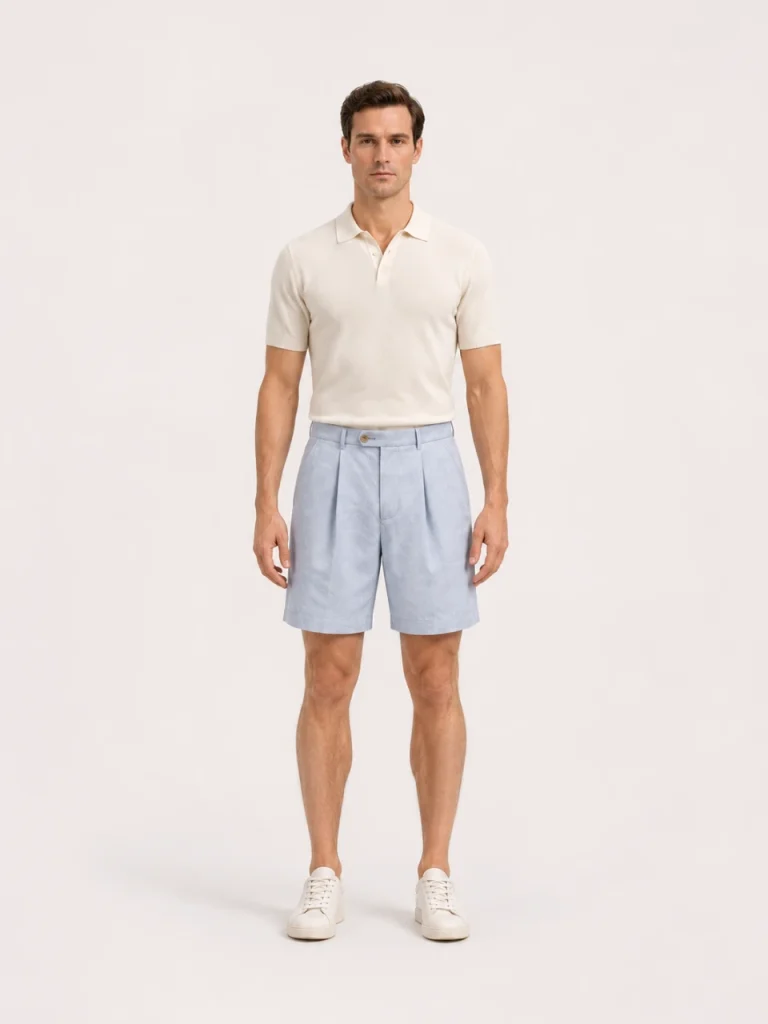
Trousers and shorts

Use an approved waist and seat as the starting point. Change the rise, leg opening and pocket construction for each style.

Fabrics for menswear samples

Start with the garment, target weight and intended care. These are examples to discuss with our fabric team. Send a swatch or target specification so we can check sourcing and sample options for your order.
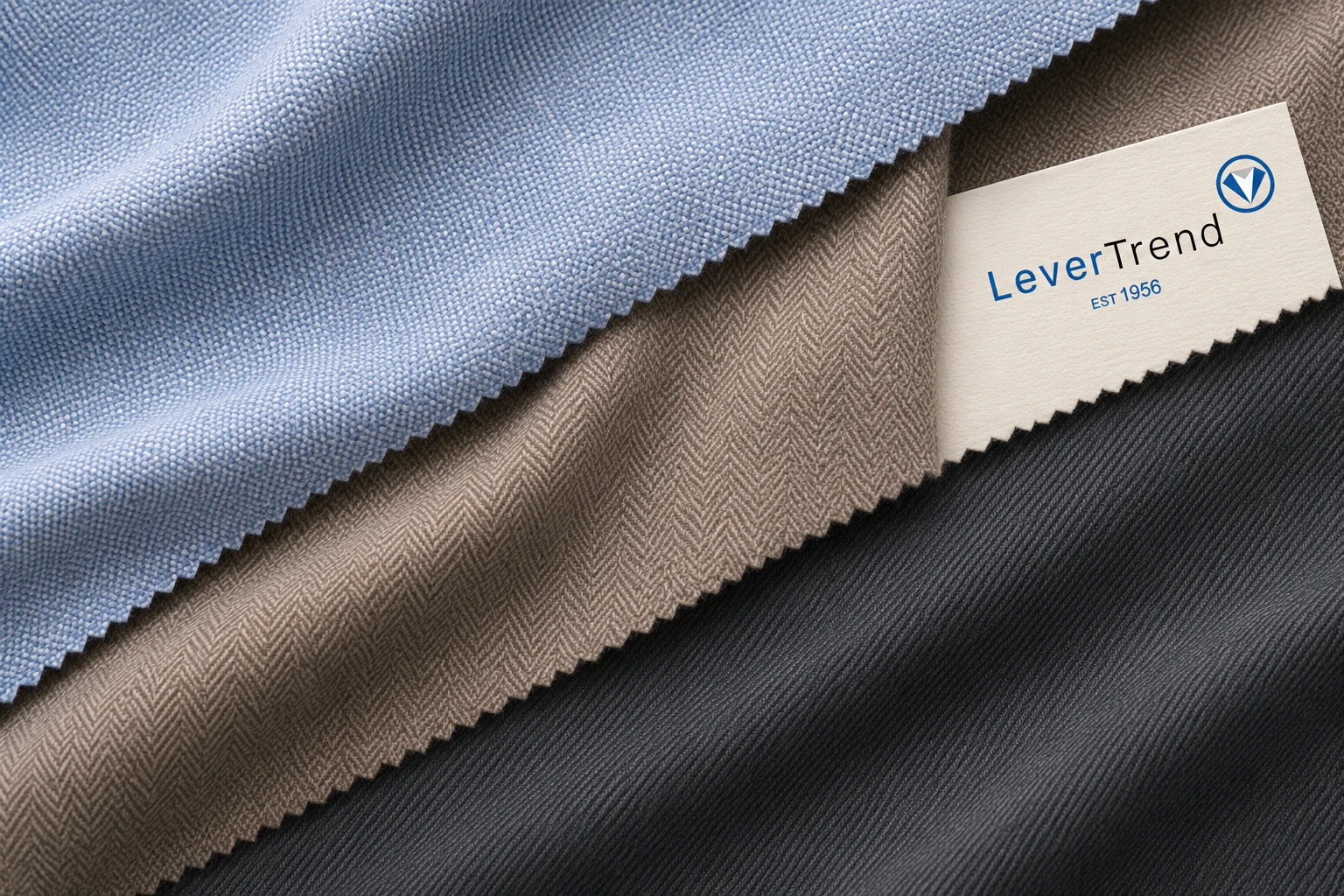
Blue Oxford, taupe herringbone and charcoal twill with a LeverTrend sample card

Dress shirting

Cotton poplin and Oxford make useful starting points for a business shirt. Check opacity in pale colours and test collar firmness with the intended interlining.

Casual shirting

Chambray, brushed flannel and linen blends give an overshirt different weights and textures. Wash the swatch before confirming the finished measurements.

Suiting

Worsted wool, wool blends, herringbone and stretch suiting can be sampled for blazers. Check the shoulder drape and how the lapel holds its pressed edge.

Trousers and shorts

Cotton twill, stretch twill, gabardine and corduroy suit different leg shapes. Compare recovery at the knee and seat on a worn sample.

Denim and workwear

Specify denim weight and an approved wash shade, or choose cotton canvas for a work jacket. Check shrinkage and seam bulk with the actual pocket construction.

Jackets and coats

Compare cotton–nylon blends and ripstop for lighter shells, or tweed and wool coating for heavier layers. Review the shell, lining and interlining together.

Full-custom menswear manufacturing

LeverTrend develops and manufactures for apparel brands. Specify the garment from pattern and fabric through construction, your labels and packing. Our team reviews the brief with you and works from the sample you approve for bulk.
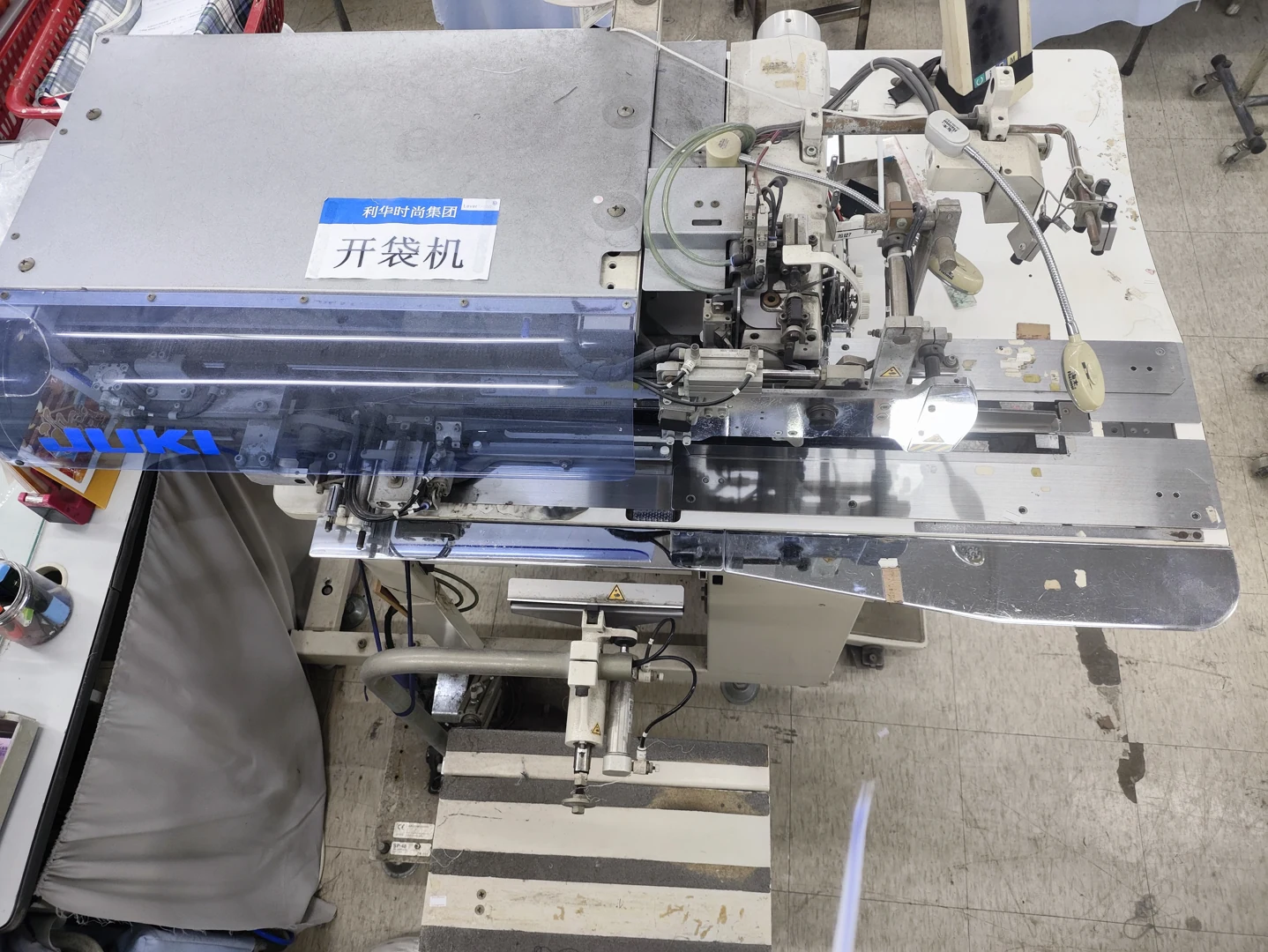
Automatic pocket welting machine on the LeverTrend production floor
Automatic pocket welting machine at LeverTrend.

Design, fit and grading

Develop from your sketch, reference sample or tech pack. Specify the silhouette, base measurements, graded size range and tolerances.

Fabric and colour

Set fibre composition, weave, weight, stretch and hand feel. Supply an approved swatch or colour reference for matching.

Garment construction

Choose collars, cuffs, plackets, pocket types, seam finishes, linings and interlinings. Mark unusual construction on the tech drawing.

Trims and hardware

Select buttons, zips, snaps, drawcords and buckles. Specify their dimensions, finish and placement.

Print, embroidery and wash

Supply artwork at finished size and mark placement or repeat. For washed styles, share the approved shade and hand feel.

Labels and branding

Specify your own neck labels, size and care labels, embroidery artwork or hangtags. We make the garments for your brand.

Packing and delivery specs

Provide folding, barcodes, pack ratios and carton markings. Flag any retailer packing instructions in the brief.

Sample and bulk approval

Approve the sample, material and trims before bulk. Agree inspection criteria, measurement tolerances and any testing required for the order.
Unbranded shirt sample and paper sleeve pattern on a cutting table

Two ways to start a menswear order

OEM · Start with an approved style

Send the approved garment or pattern, tech pack and trim list. Mark what must stay the same and any changes for this order so we can cost the revision accurately.

ODM · Start with a design reference

Share your sketch, target price and the season you are buying for. Our Shenzhen team can narrow the fabric options and develop a pattern for your first fit sample.